

The kindness friends, family, and acquaintances show; through messages, hugs, flowers, or acts of support; deserves acknowledgment that is heartfelt and genuine. Saying “thank you” for these condolences isn’t just polite etiquette; it can also be a healing moment in your grief journey. But knowing how and what to write isn’t always easy, especially when emotions are raw and overwhelming.
In this comprehensive guide, we’ll walk through why thank you messages matter, offer practical tips for writing them, and share hundreds of message examples you can tailor to your own voice and situation.
Understanding Condolences
What Are Condolences?
Condolences are expressions of care, compassion, and understanding following a loss. They help remind us that we are not alone in grief, and that others care about our well-being during a painful time. Often they are simple but meaningful acknowledgments; a hug, a shared memory, or a heartfelt card.
When to Send Thank You Messages
There isn’t a strict rule about timing when it comes to thank you messages for condolences; it’s more about genuine acknowledgment.
Immediately After Sympathy Is Given
After the Funeral or Memorial
Sometimes you may be too emotional to respond right away. It’s okay to send thank you messages after the funeral or memorial service; many families do this as part of their healing process.
Weeks or Months Later
Grief isn’t linear, and people may continue to offer support weeks or even months later. A thank you message that acknowledges support during this ongoing period can help maintain connection and show your heartfelt gratitude.
Tips for Writing a Meaningful Thank You Message
Writing thank you messages during grief isn’t always easy. Here are some tips to help you find the right words:
Personalize Your Message
Acknowledge Specific Gestures
Keep It Sincere and Respectful
Your words don’t need to be long; they just need to be meaningful. Speak from the heart and make sure the tone is respectful of the situation.
General Thank You Messages
Here are some message ideas you can use in cards, texts, emails, or social media posts:
Short and Sweet Messages
- Thank you for your kind condolences. Your thoughtfulness means a lot to me.

- I truly appreciate your support during this time.
Simple Heartfelt Thanks
Sometimes a straightforward but heartfelt message is exactly what’s needed:
- Your message brought comfort to my heart. Thank you for your sympathy.
Appreciative and Warm Messages
- We are deeply thankful for your condolences and support. It has meant so much to us.
Thank You Messages for Specific Situations
Thank You for Flowers and Gifts
Flowers, memorial donations, and thoughtful gifts often arrive from those wishing to offer comfort. Try something like:
Thank You for Attending the Service
If someone took the time to attend the service, their presence itself is meaningful:
Thank You for Acts of Service
Support can also come in actions, not just words:
Thank You Messages for Family and Close Friends
When writing to someone especially close to you, more personal messages can reflect emotional depth.
Emotional and Personal Messages
- Thank you for walking beside me through this sorrow. Your love and support have been a blessing.

- Your comforting presence and shared memories of [Name] have comforted my heart more than you know.
These messages go beyond basic appreciation; they acknowledge the emotional support that close friends and family provide during grief.
Professional and Formal Thank You Messages
Sometimes you may need to thank associates, workplace peers, or distant relatives. Keep your message respectful and appropriate:
For Work Colleagues
- Thank you for your condolences and understanding during this difficult time. Your support is greatly appreciated.
For Acquaintances or Extended Family
- Thank you for your kind words and sympathy. We are touched by your thoughtfulness.
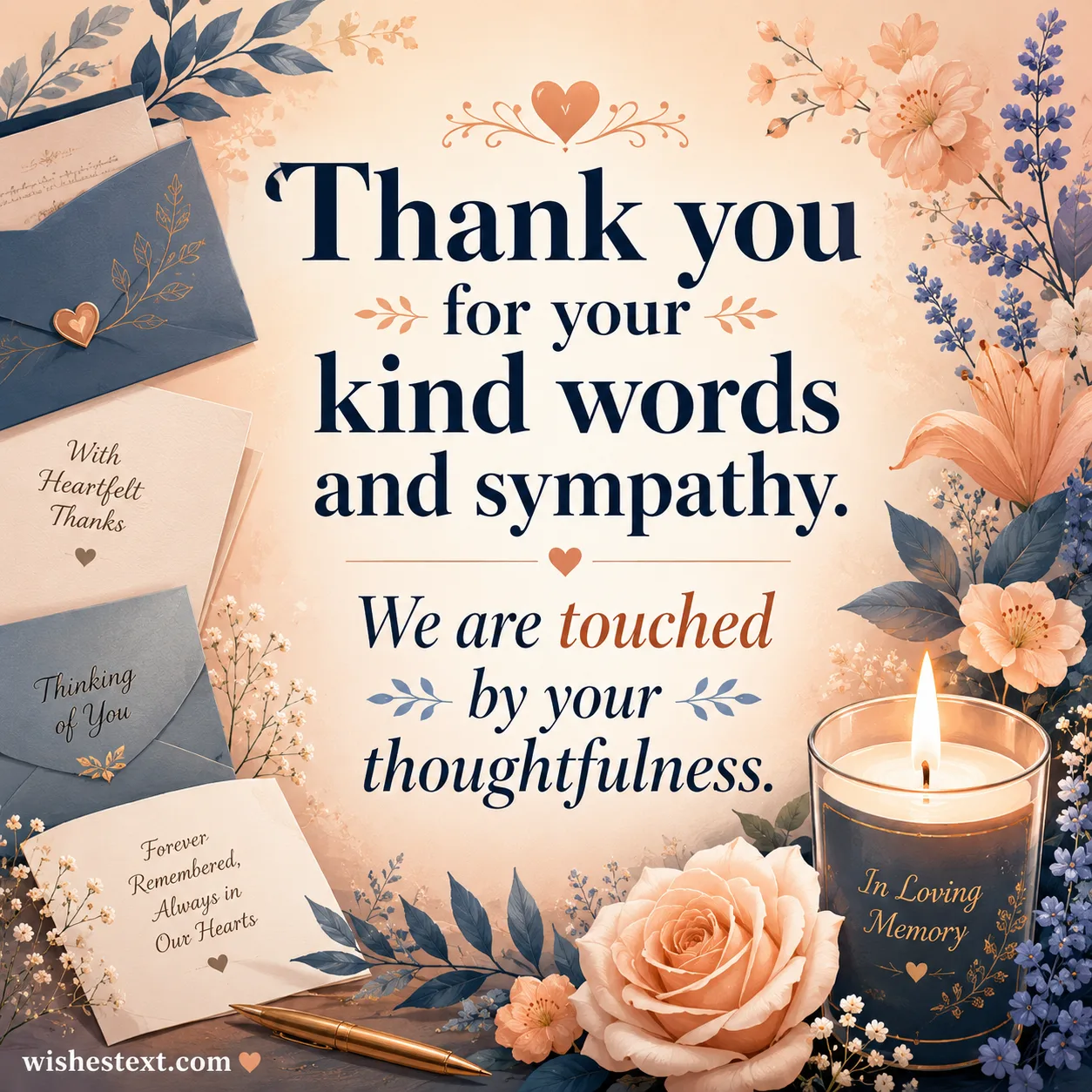
These messages maintain professional warmth without being overly personal.
Creative Thank You Messages for Social Media
If you’re receiving condolences online; through comments or messages; here are some ideas:
Thoughtful and Concise Responses
- Thank you all for your kind words and support during this time. We are truly grateful.
Public Expressions of Appreciation
- Your love and prayers mean so much to our family. Thank you for the outpouring of support.

These respectful acknowledgments help build community during grief while recognizing each person’s care.
Mistakes to Avoid in Thank You Messages
While expressing gratitude, it’s important to be thoughtful about your wording:
Avoiding Clichés
Not Being Insensitive
Avoid minimizing your own feelings or the sender’s intentions. Even simple words can carry deep meaning.
How Thank You Messages Help in Healing
Expressing gratitude; even in sorrow; can be therapeutic. It reminds us of the community of love and support we have around us. Acknowledge that support not just for others’ sake, but for your own emotional processing and healing.
Conclusion
Writing thank you messages for your condolences isn’t just about etiquette; it’s about honoring the compassion shown to you and your family during one of life’s toughest moments. Whether your message is brief, personal, creative, or formal, ensuring it reflects gratitude, warmth, and sincerity will resonate deeply with those who reached out in your time of need.
Recommended: 70+ Teacher Appreciation Messages From Parents
Frequently Asked Questions (FAQs)
1. Do I have to send individual thank you messages for every condolence I receive?
You don’t have to; especially if you received a large number. A general acknowledgment, in person or via social media, is perfectly fine.
2. What if I can’t find the right words to express thanks?
That’s okay; writing even a few sincere sentences from the heart goes a long way.
3. Is it okay to send thank you messages weeks after the funeral?
Yes; most people understand it takes time to respond during grief, and your message will still be appreciated.
4. Should I write thank you messages for online condolences?
If possible, yes; simple replies like “Thank you for your support” show your appreciation publicly.
5. How long should a condolence thank you message be?
There’s no set length; as long as it conveys sincere gratitude, a few thoughtful sentences are enough.

Adam Brooks is an American writer and content reviewer in his thirties, and a valued member of the management team of WishesText. He specializes in creating inspiring, emotionally engaging content that resonates with readers across different occasions.
With a strong eye for detail and storytelling, Adam also focuses on crafting share-worthy images designed for happy moments, special celebrations, and meaningful everyday memories. His work blends thoughtful words with visually appealing designs to make every message more memorable and impactful.